When a property listing says “in good condition”, what usually comes to mind is a pleasantly renovated, attractive home ready to move into. Nice floors, freshly painted walls, a modern kitchen, newer windows – and we immediately feel there is nothing much to do with this house or flat.
But does “good condition” really mean that?
The answer is not that simple. A property can be attractive inside and out while concealing technical problems that only come to light months or years later. Equally, an older, less modern house can be in good technical condition even if it does not look perfect at first sight.
Good condition, after all, does not necessarily mean good looks.
A freshly painted wall does not tell the whole story
When viewing a property it is natural to notice first what we can see. What are the finishes like? Are the walls in good order? What condition are the windows in? Is the bathroom modern?
These are important considerations, but they show only part of the property.
Behind the walls are the load-bearing structures, the roof, the insulation and the mechanical services. Below ground are the foundations and the utilities. And the building’s energy characteristics will affect your future outgoings whether or not you can see anything of them during a viewing.
To judge a property’s real condition, then, it is not enough to walk through the rooms and check that everything looks nice.
What actually makes a property “in good condition”?
A property’s condition is worth examining from several different angles. These are interrelated, so it is unwise to form a view on the basis of one area alone.
The condition of the load-bearing structures
One of the most important questions is what condition the structure of the building itself is in.
Are there cracks in the walls? If so, are they merely surface defects, or could they point to a more serious structural problem? Is there any visible settlement, deformation or damp? What condition are the floors and the roof structure in?
A hairline crack does not necessarily indicate a problem, just as a wider crack does not automatically mean the building is structurally unsafe.
What matters is knowing what we are looking at.
Damp and protection against water
One of the most common problems in property is damp.
Signs pointing to the presence of moisture can be found around cellar walls, plinths, bathrooms, roof structures or flat roofs.
A freshly painted wall, however, can easily cover the traces of earlier problems.
So it is worth looking not only at whether there is a patch of mould, but also at what could have caused the damp and what its consequences might be.
The roof and the insulation
The condition of the roof significantly affects how usable a house is and what it will cost later on.
The state of the covering, the timber junctions, the protection against water and the insulation all matter.
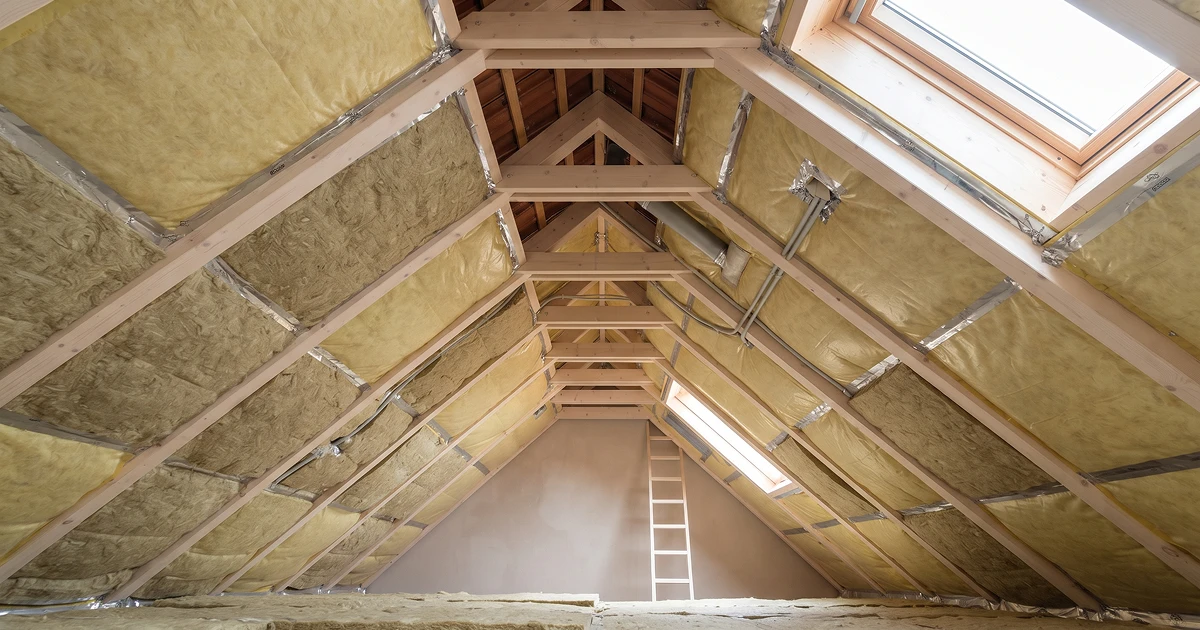
Nor is it indifferent how the insulation has been formed in a loft conversion. A seemingly thicker insulating material does not in itself guarantee correct thermal and moisture performance.
A poorly formed build-up can later lead to condensation, damp or even damage to the timber structure.
A house can be “good” or “bad” in energy terms too
Energy characteristics should not be left out when judging a property’s condition either.
How well insulated is the building? What condition are the windows in? What heating system is in place? What level of energy consumption can be expected?
A house can be in sound technical condition while being outdated in energy terms.
That does not necessarily make it a bad buy, but it is important to know what maintaining the current condition, and any future upgrade, might cost.
When valuing a property, therefore, its energy condition matters not only because of the bills, but also because a later retrofit can require a substantial investment.
The mechanical services should not be forgotten either
The condition of the heating, the hot water, the water and drainage system and the electrical installation often only becomes genuinely important when something fails.
An old boiler, for example, may be working at present, but that does not mean it is reliable in the long run or economical to operate.
The same is true of the electrical installation. It is not enough to see that the property has power. The available capacity matters too, as does whether a planned upgrade – a heat pump or charging an electric car, for example – can be achieved with the existing system.
A working system is not necessarily an up-to-date system.
The plot is part of the property too
With a house, attention often centres on the building itself, yet the plot is at least as important.
How developable is the plot? Is there scope for an extension? Which zone does it fall into? What site coverage is permitted? How is the green space calculated?
Even with a plot that looks perfect at first, it can turn out that the buyer’s later plans – a garage, an outbuilding, a terrace or an extension, for example – cannot be realised, or only to a limited extent.
A land plot assessment can therefore be important not only before buying a plot, but also when buying an existing property.
Documentation matching reality
There is one more area we talk about less often: the property’s documentation.
It matters whether the building, room, extension or alteration that exists in reality is consistent with the available documentation and with the land registry records.
A terrace that was enclosed earlier, a room created afterwards or a converted loft can cause problems later if its legal or technical background is unresolved.
This is particularly important if you are buying the property with a mortgage, plan to extend it later, or might pass it on in a few years’ time, since a property with unresolved legal status can put potential buyers off.
And what does all this mean for the value of the property?
The value of a property cannot be determined purely by how attractive the kitchen is or when the living room was last painted.
Value is shaped, among other things, by the property’s location, the characteristics of the plot, the technical condition of the building, its energy performance, its layout, its usability and the renovation work it needs.
The value of an old but consistently maintained building, for example, has to be judged quite differently from that of a spectacularly renovated property concealing significant structural or mechanical problems.
“Renovated” and “in good condition” do not always mean the same thing.
The aim is not for every property to be flawless
It is also important to see that almost every property has faults of one size or another.
In a second-hand house that is entirely natural.
The question is rather what kind of faults they are, how much they cost to put right, how urgent they are, and whether there are problems you had not reckoned with at the time of purchase.
A cosmetic defect is an entirely different category from a problem with the roof structure, a damp cellar wall or an ageing mechanical system.
One of the most important tasks of a building survey, therefore, is not to find faults at any cost, but to help distinguish the minor repairs from the genuinely significant risks.
No single sentence tells the truth about a property
The phrase “in good condition” gives far too little information on its own.
A property can be:
- attractive but technically outdated,
- technically sound but outdated in energy terms,
- renovated but poorly executed,
- or older and less eye-catching, yet dependable.
That is precisely why it is worth seeing the whole picture when buying a property.
The load-bearing structures, the technical condition of the building, its energy performance, its mechanical services, the characteristics of the plot and the property’s value together show what you are actually buying.
Because “in good condition” should not, in the end, be a marketing phrase.
It should be a condition we understand in technical terms as well.
And if you want a clearer view before buying a property, it is worth uncovering the likely faults, renovation needs and technical risks before you decide. A thorough building survey, an energy assessment, a valuation or, where needed, a land plot assessment can help you see not only what the property is like today, but also what to expect from it in the years ahead.