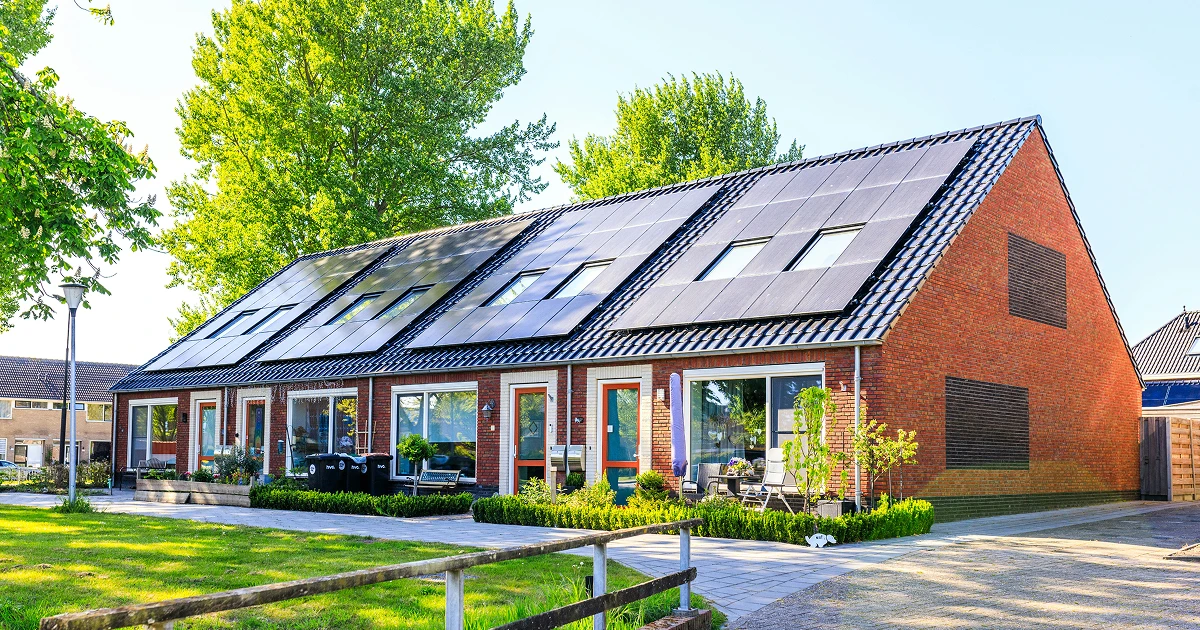
When we hear that a property is “energy efficient”, many people think first of solar panels, a heat pump or thick insulation. These can indeed be important elements, but on their own they do not make a house energy efficient.
For a home that works well and runs economically, you have to look at the building as a whole. What matters is not only what kind of heating it has, but also how much heat the house loses, how good the windows and doors are, how ventilation is handled, and how efficiently the building services perform.
Retaining heat is the foundation
A building’s energy demand is largely determined by how much heat escapes through the elements that enclose it.
In winter, the heat produced by the heating system tries to move outwards through the walls, the roof or the ceiling, the floor, the windows and doors and the thermal bridges. The poorer the insulating capacity of these elements, the more energy is needed to maintain a comfortable indoor temperature.
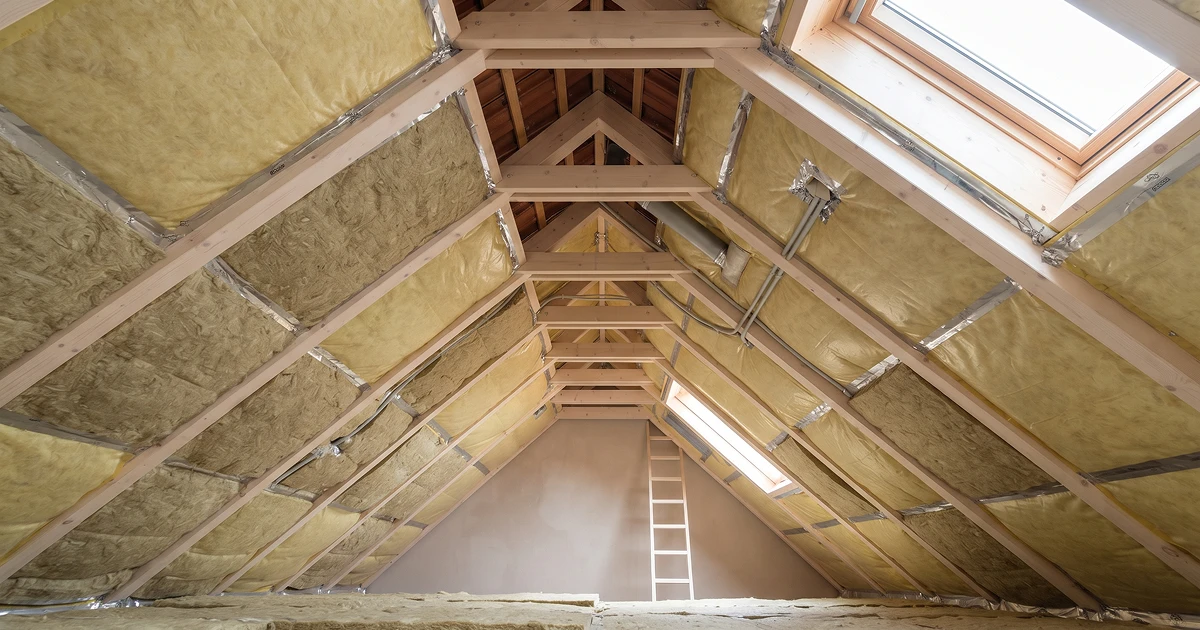
One of the most important foundations of energy efficiency is therefore adequate and continuous insulation.
It is not enough, however, to look only at the façade. The roof, the ceiling, the floor and the elements enclosing the space towards the cellar all play their part. A single weak point can affect the performance of the whole building.
Windows and ventilation matter together
Old, poorly sealing windows can cause significant heat loss. Modern windows can reduce this considerably, but correct installation is at least as important.
Replacing windows also changes the air exchange of the building. If well-sealing windows are fitted into a house that used to be draughty, natural air exchange can drop.
During an energy retrofit, therefore, proper ventilation must not be forgotten. Saving energy is important, but not at the expense of fresh air.
What you heat with is not indifferent
The efficiency of the heating system is also decisive. A modern boiler or heat pump, however, can only work really well if it is properly matched to the building and to the heat emitters.
A well-insulated building has a lower heat demand, so a heat pump, for example, can operate under more favourable conditions. Underfloor heating or correctly sized radiators can then allow a lower flow temperature.
In other words, simply swapping out the old heating appliance is not necessarily the best solution. The first thing to examine is what the building itself needs.
Energy efficiency matters in summer too
Energy efficiency is not only about heating in winter. Summer overheating is an increasingly important question.
Large glazed areas can let a considerable amount of solar radiation into the building. Proper external shading, good orientation and appropriate ventilation can, however, reduce overheating.
This is not only a matter of comfort. If a home can only be kept at a pleasant temperature in summer by running the air conditioning constantly, electricity consumption can rise significantly.
Thermal bridges can be a hidden problem
At certain points of a building, heat flow differs from that of the surrounding elements. These are what we call thermal bridges. They can occur at floor slabs, balconies, corners or around windows and doors, for example.
Thermal bridges can increase heat loss and, in certain cases, lead to condensation and later to mould growth.
It is therefore not enough to see that a house “has insulation”. The continuity of the insulation and the correct detailing also matter.
It is not only about the bills
The benefit of an energy-efficient property is not limited to paying less for heating or cooling.
A well-designed building can be more comfortable: it can provide a more even temperature, more pleasant internal surface temperatures and, with proper ventilation, a better indoor environment.
Before buying or renovating a property it is therefore worth looking not only at what it costs, but also at what energy condition it is in and what the cost of upgrading it might be.
Energy efficiency only makes sense as a system
A property does not become energy efficient because it has solar panels or a heat pump. Real results require the building’s structures, windows, building services and ventilation to work in harmony.
The aim is simple: to provide the best possible comfort with the least possible energy.
And the first step towards that is understanding the property’s true condition. Only then can you decide where it is worth intervening and what it is worth spending on.